
Scottish customers are being ripped off by the UK energy system

Scottish customers are being ripped off by the UK energy system

Scotland generates an abundance of cheap, clean power. Scotland’s renewable energy costs about one-third of the price of fossil fuel-based electricity to make. Every year, we generate enough cheap renewable energy to cover Scotland’s needs. Yet our bills are sky high!

This contrast says it all

Scotland: typical household electricity costs around 27p per Kilowatt Hour (/kWh)
Norway: typical household electricity costs 10p/kWh, with a new proposal to reduce household electricity costs (to fight inflation) to 3p /kWh

The Norwegians call that new proposal ‘The Norway Price’ – but you don’t pay The Norway Price, you pay the Broken Britain price and it’s almost ten times more than Norway is planning. You are being ripped off!

Your energy bills will be lower in an independent Scotland

An independent Scotland would have some of the lowest energy costs in the world, but as part of the UK we pay some of the highest prices for energy. This is because we pay the UK price for energy which is essentially set by the cost of fossil fuel-based generation in England.

Why? Because Westminster’s energy system is broken, so you pay more.

It’s Westminster’s flawed energy market policy that is increasing energy bills and, as energy is required for everything we make from food production to electronic goods etc, it’s that overpriced energy that is causing inflation and the cost of living crisis.

The fake “free market”

We’re told energy is priced by a free market. It isn’t. It’s a system privatised by governments Scotland didn’t vote for, stitched together with rules that let energy traders manipulate the price to their advantage – for example by never charging less than the price of gas, which is the most expensive way to generate energy.

How the UK Electricity Market Works (Basics + Marginal Pricing)

You may have to read this twice, as you are not going to believe this!

Here is how the UK electricity (and energy) market works including a hugely unfair policy called marginal pricing which is why gas prices drive up all electricity prices, even when in Scotland all of our generation needs are met from low-cost renewables.

Supply meets demand via “merit order” system

In each half-hour slot, system operators match electricity supply to demand. Generation companies are sorted by their short-run marginal cost (i.e. the cost to produce one additional Megawatt Hour (MWh) of energy). Renewables like wind, solar, hydro where Scotland excels have very low marginal costs, while gas plants have higher marginal costs (fuel + variable costs, carbon, pollution etc). The pricing system starts by taking in the lowest cost and then the next supplier is brought in via the merit order until demand is met. Then we pay the average price of all the different supplies right? Wrong!

Marginal (or “spot”) price setting

The last (and therefore most expensive – gas) energy producer needed to meet demand is the marginal generator and its cost sets the wholesale electricity price for all generation in that 30-minute slot. In other words: every supplier is paid the marginal cost, regardless of whether their generation cost was lower – hence enormous profits for renewable energy producers but no lower cost benefit to the consumer.

Why gas often sets the price

Gas plants are flexible and relatively quick to ramp up or down, so they are frequently used to balance fluctuations. Because gas plants are almost always the marginal price setting plant, their high fuel costs dominate the market price. The price of gas started rising in summer 2021 as the economy started to open up again after Covid and then rose again due to the gas supply issues related to the Russian invasion of Ukraine.  So we have lived with this market dynamic for 4 years now and the UK government have done nothing whilst it drives inflation and causes fuel poverty.

UK Generation Mix & Recent Figures – why Gas pushes up the price you pay for electricity!

In 2024, renewables generated 50.8% of electricity in the UK (wind ~29.5%, solar ~5.2%, plus hydro, biomass). Nuclear provided about 14.25%. Fossil fuels (mainly gas) were about 31.5%. The remaining share is small (coal is mostly phased out). In recent years, it’s estimated that gas sets the UK wholesale electricity price in ~98% of time slots. So despite renewables and nuclear together making up 65% of output, gas still plays a crucial role in price formation.

Put differently: you don’t pay the average cost; you pay the cost of the most expensive needed generator.

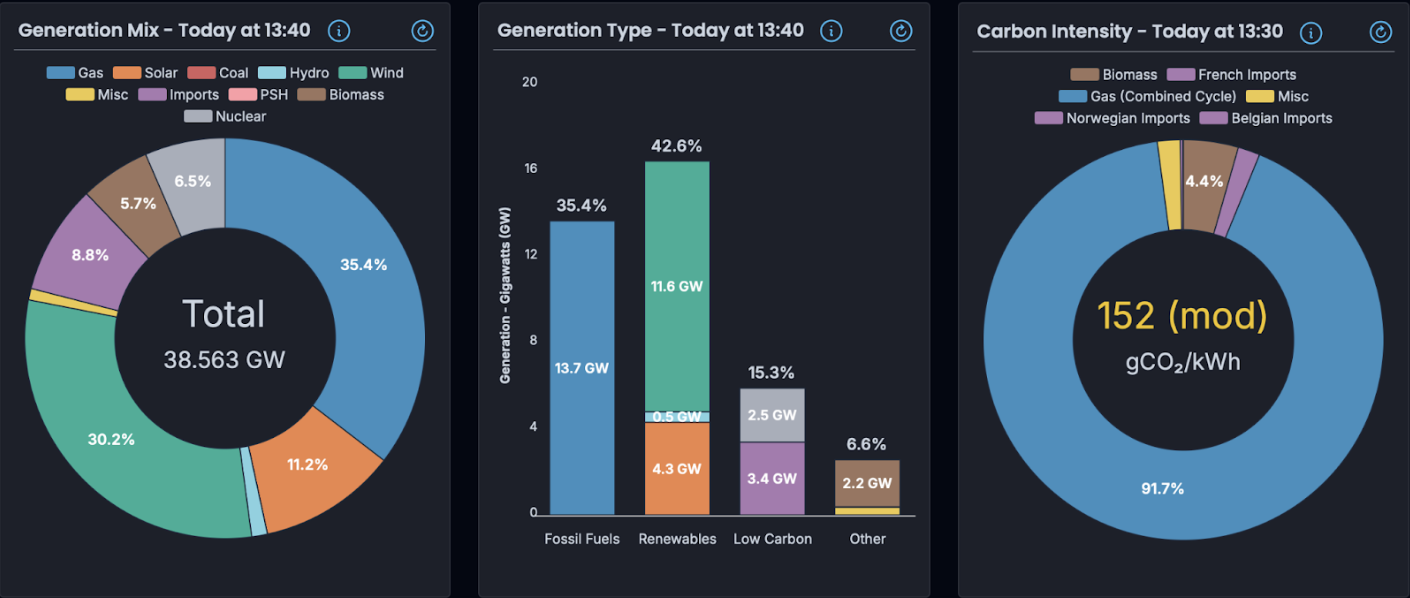
You can take a look at EnergyDashboard.co.uk and see exactly what the UK energy mix is at any one time and how much of the UK’s energy is met by hugely expensive gas that Scotland doesn’t need. At the time of writing this article Gas is making up 35.4% of the energy mix and you are paying through the nose for it.
Scotland is a cheap renewables powerhouse

The latest figures show that Scotland generated 113% of its electricity needs from renewables. So in an independent Scotland, you would pay the lowest price possible for energy, switching Scotland from one of the most expensive nations in the world for energy to one of the cheapest. Given time and investment in hydro storage, we could start to consider if the Scotland Price could match the Norway Price – but to begin with your bills should drop by half or more.

End Scotland’s energy bill rip-off now!

Read the full article at Believe in Scotland by visiting the link below.. https://www.believeinscotland.org/scottish_customers_are_being_ripped_off_by_the_uk_energy_system?utm_campaign=energy_and_review_newsletter&utm_medium=email&utm_source=believeinscotland.
Scotland Does not Need Nuclear

Scotland does not need nuclear power and people aren’t being told the truth

The nuclear industry has one of the most aggressive lobbying and public relations campaigns of all energy sources. It pushes relentlessly on politicians and the public to support the merits of nuclear power based on partial or inaccurate information. Very often this goes unchallenged in the Scottish media.

Given that nuclear power presents itself as a pragmatic response to decarbonising energy and given the scale of the PR campaign, it is perhaps not enormously surprising that SNP voters appear to split with their party over this issue. But would they continue to support nuclear power if they new the numbers?

Here are some stark realities. The cost of generating of electricity from renewable sources is £38 to £44 per MWh. The estimated cost of the same electricity from nuclear (at the new Hinkley Point C reactor) in 2025 is £150 per MWh. It can only be presumed that the participants in this survey were not told that generating electricity would become between three times as expensive with nuclear.

But even that hides the true costs. Nuclear power is very dangerous and, at the end of its lifecycle, is very complex to decommission and make safe. Every spent rod of nuclear fuel takes a full ten years simply to cool down. They must be immersed in a deep pool of cold, constantly-circulating water and monitored closely for ten years just to bring them down to a cool enough temperature that they can be processed.

That’s just the ongoing fuel. The complexity of decommissioning and entire nuclear power plant is significantly greater. In fact the current estimate of the cost for decommissioning nuclear power is about £132 billion. That is not paid for by consumers in their electricity bill – it is paid for by consumers through their tax.

This is the second stark reality that nuclear power works hard to conceal; not only is it three times as expensive as renewables to run, there is then a cost of at least £4,600 for every household to decommission the nuclear power plants and make them safe for the future.

Of course, safety is another issue here. Nuclear power stations are very vulnerable. They are extremely sensitive sites which require substantial long-term attention. There are currently concerns around the world that unreliable power supplies could mean existing plants may struggle to keep spent fuel rods from combusting if they cannot constantly and continually keep large amounts of cold water circulating round spent fuel.

Nuclear power stations do not like loss of electricity, especially for any extended period of time. This makes them very climate-vulnerable. And of course who knows what sorts of extreme weather we may face before the lifetime of a nuclear station is complete. Fukushima is not a cautionary tale for no reason.

And it is uncomfortable to dwell on the risks of nuclear sites if they become targets for terrorism or in war. No-one is expressing continent-wide anxiety over the threat-to-life status of Ukraine’s wind turbines; they absolutely are over the shelling of Ukrainian nuclear power stations.

The remaining case for nuclear is to provide ‘electricity baseline’ – the ability to bring electricity provision on and off line as renewable generation rates rise or fall (if the wind does blow), or during periods of peak demand. This just isn’t really honest – nuclear power does not like rapid changes in supply and are designed to run flat out, all the time, not least because costs rise rapidly if they are running at less then full power. You can’t just ‘turn them on and off’. So yes, they can provide baseline electricity but not ‘on demand’ electricity that can balance renewables.

Hydrogen storage can though. Scotland currently dumps enormous amounts of perfectly useable electricity in the ground if it is generated when there is no demand. This can be turned into hydrogen and then, on demand, converted back into electricity. At the moment the cost of electricity from hydrogen is about half as much again that of generating by nuclear. But there are big caveats to that.

First, the current hydrogen electricity price is about £230 per MWh, but this is a rapidly-developing area of technology and the current industry target is £100 per MWh. That makes it cheaper than nuclear. Second, there is no hidden capital cost – the incredible costs of building and decommissioning nuclear which are hidden from consumers by subsidy from tax just isn’t there for hydrogen. It is a simple technology.

Third, these costs all assume that you are generating hydrogen from electricity at full wholesale grid prices. But if you are using electricity that would otherwise be dumped because it is being generated at the ‘wrong time’, the hydrogen becomes a waste product. It is in practice much cheaper than nuclear and can supply long-term baseline. (Battery storage for short term is even cheaper.)

That is the reality that respondents in this poll were not given. Try the poll again with ‘do you want to pay three times as much for your electricity with an additional costs to your household of £4,600 to have unsafe nuclear power when renewables with hydrogen storage are cleaner, cheaper and safer’.

Consistent, reliable renewable energy isn’t hard to solve in Scotland. There are nations where nuclear may have to be part of a clean energy solution, but Scotland is not one of them. You need to withhold a lot of information from people to make them believe the wrong thing about nuclear.

Content retrieved from: https://www.commonweal.scot/.